
Last updated: June 9, 2026
The first houseboat holiday changes something. Anyone who has ever stood at the helm themselves, mastered a lock operation, and sat on the aft deck in the evening with a glass in hand, immediately understands why this form of holiday captivates so many people. The conclusion after the first houseboat trip: Our learnings show that this way of traveling offers far more than expected, but also requires a few things that you simply didn't have on your radar beforehand.
The most important things first: A houseboat holiday is more accessible than you think, cheaper than a comparable hotel holiday on the coast, and easily manageable for most people after a short briefing. However, anyone who starts unprepared wastes valuable time and nerves.
What are the most important learnings for your first houseboat holiday?
The biggest learning is simply: plan less, arrive more. A houseboat holiday works on a different rhythm than a city trip. The route is a suggestion, not a contract.
The most important findings at a glance:
- Take the briefing seriously: Most rental companies offer a 1-2 hour briefing. Every minute of it is worth gold.
- Flexibility beats perfectionism: Those who plan 50 kilometers daily will be frustrated. 20-30 kilometers are realistic and more relaxed.
- Shopping is also possible from the boat: Many harbors have supermarkets within walking distance, but a basic supply for two days should always be on board.
- The weather plays a role: With strong wind or headwinds, it's better to anchor for half a day and explore the surroundings.
- Communication in the team is everything: When docking, you need clear agreements, otherwise it gets stressful.
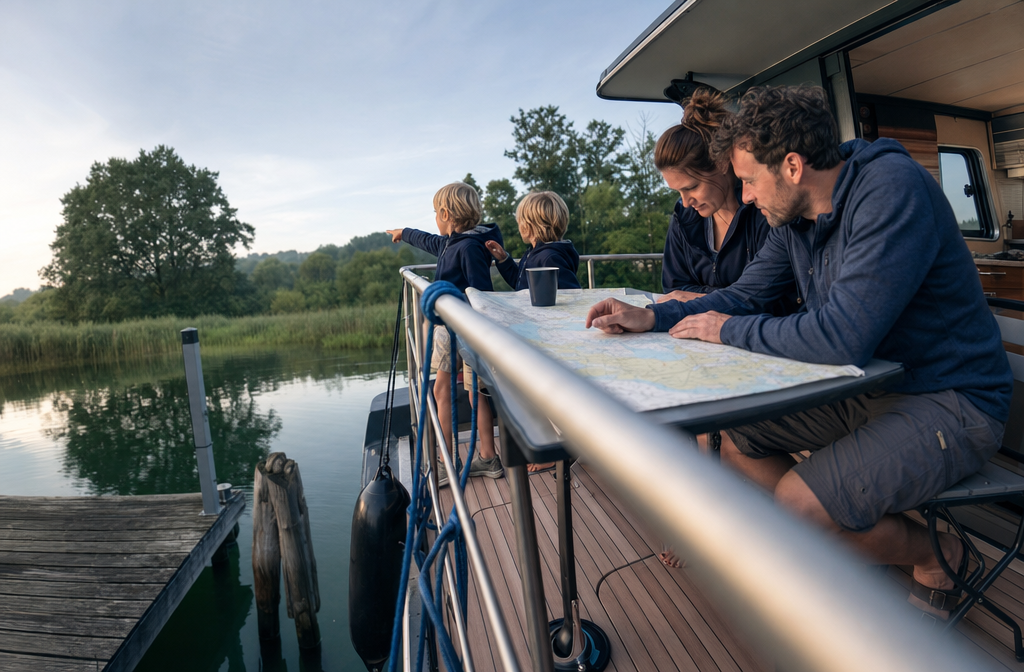
How difficult is it really to steer a houseboat?
Honest answer: significantly easier than most suspect. In Germany and on most European inland waters, you don't need a license for houseboats up to a certain engine power. The boats react sluggishly, which surprises beginners at first, but also makes mistakes more forgivable.
The biggest challenges when steering:
- Docking and undocking: This is where most beginner mistakes happen. Slow, patient, communicative.
- Locks: They sound intimidating, but with clear communication to the lock keeper, they are easily manageable.
- Wind: A crosswind of more than 3 Beaufort makes maneuvering noticeably more difficult.
Anyone who has ever driven a pedal boat or a small motorboat will feel comfortable after an hour.
How much does a houseboat holiday in Germany cost?
A houseboat holiday in Germany is variable in price, but by no means a luxury product. Costs depend on the season, boat size, and region.
| Category | Low season | High season |
|---|---|---|
| Small boat (2-3 people) | from 800 Euros/week | from €1,400/week |
| Medium-sized boat (4-6 people) | from €1,200/week | from €2,200/week |
| Large boat (6-8 people) | from €1,800/week | from €3,200/week |
In addition, there are fuel costs (50-150 Euros depending on mileage), harbor fees (5-20 Euros per night) and groceries. Per person, a houseboat vacation for groups is often cheaper than a comparable hotel vacation.
Tip: Those who book early save significantly. Bookings through Campcruisers often offer attractive early bird discounts.
What does a houseboat license cost in Germany?
For most houseboats on German inland waters, no license is required. This applies to boats up to 15 meters long with an engine power of less than 15 HP on certain waters. Stricter rules apply on some routes, such as on the Rhine or the Elbe.
Those who want to obtain a Sportbootführerschein Binnen pay between 300 and 600 Euros for the course and exam, depending on the provider. This makes sense for everyone who wants to be on the water regularly, but is usually not necessary for the first houseboat vacation on the Mecklenburg lakes or the Müritz.
What mistakes should one avoid on the first houseboat trip?
The conclusion after the first houseboat trip shows similar patterns with almost all beginners. The most common mistakes:
- Overly ambitious daily routes: Those who want to head for a new city every day miss out on the best part: letting yourself drift.
- Too little provisions: Small harbors do not always have shopping facilities. A two-day basic supply is mandatory.
- Poor role distribution: Who steers, who moors, who navigates? Clarify this beforehand, not when docking.
- Ignore weather warnings: On inland waters, the weather can change quickly. Check app weather services daily.
- Underestimate the deposit: Most rental companies require a deposit of 500-1,500 Euros. The money must be available.
Are houseboats suitable for families with children?
Yes, and very much so. Houseboats are one of the most family-friendly forms of vacation, because children can be actively involved and everyday life on board remains manageable. Children love to help with docking, watch locks, and fish from the boat.
Important safety instructions for families:
- Life jackets for children always on board, ideally automatically inflatable.
- Check railings and nets, especially with young children.
- Never leave children unattended on deck when the boat is underway.
Most houseboats are accessible at ground level and can therefore be easily used with a stroller or buggy.
Are houseboats suitable for seniors?
Houseboats are an ideal form of vacation for many seniors because the pace is self-determined and no peak physical performance is required. It is important to pay attention to boarding: some boats have high steps or narrow gangways.
Those with limited mobility should explicitly ask for more accessible models when booking. Campcruisers will be happy to advise you individually on this.
Where are the best routes for houseboat beginners?
For the first houseboat vacation, waters with little boat traffic, clear markings, and good infrastructure are particularly suitable.
Top beginner routes in Germany:
- Mecklenburg Lake District: Germany's most popular houseboat area, well-marked, many harbors.
- Spreewald: Dreamlike and quiet, ideal for nature lovers, very relaxed driving.
- Havel: Varied, many moorings, good for families.
- Masuria (Poland): A bit further away, but cheaper and beautiful.
All these areas are accessible to beginners without a license and offer a dense infrastructure of harbors, restaurants, and shops.
What do you need to consider when chartering a houseboat?
When chartering, there are a few points that should not be overlooked. The conclusion after the first houseboat trip shows: those who tick off this checklist start relaxed.
- Read the contract carefully, especially cancellation conditions and deposit regulations.
- Complete the briefing thoroughly and ask questions.
- Inspect the boat for damage together with the rental company upon handover and document it.
- Clarify insurance coverage: what is covered, what is not?
- Plan the return time realistically, factor in a buffer.
How much space do you really need on a houseboat?
Less than expected, but more than camping in a tent. A houseboat for four people typically has two cabins, a bathroom, a small kitchen, and a salon. This is easily enough for a week if everyone involved is willing to compromise.
For longer trips or groups that spend a lot of time indoors, a larger boat is worthwhile. As a rule of thumb: at least 3-4 meters of boat length per person.
What surprises are there on the first houseboat trip?
The most positive surprise: how quickly you switch off. After just one day on the water, the outside world feels far away. The cell phone loses its importance, the view of the water gains it.
The most unpleasant surprise: the noise when docking. What looks relaxed from the outside is actually a coordinated team effort that requires communication and nerves.
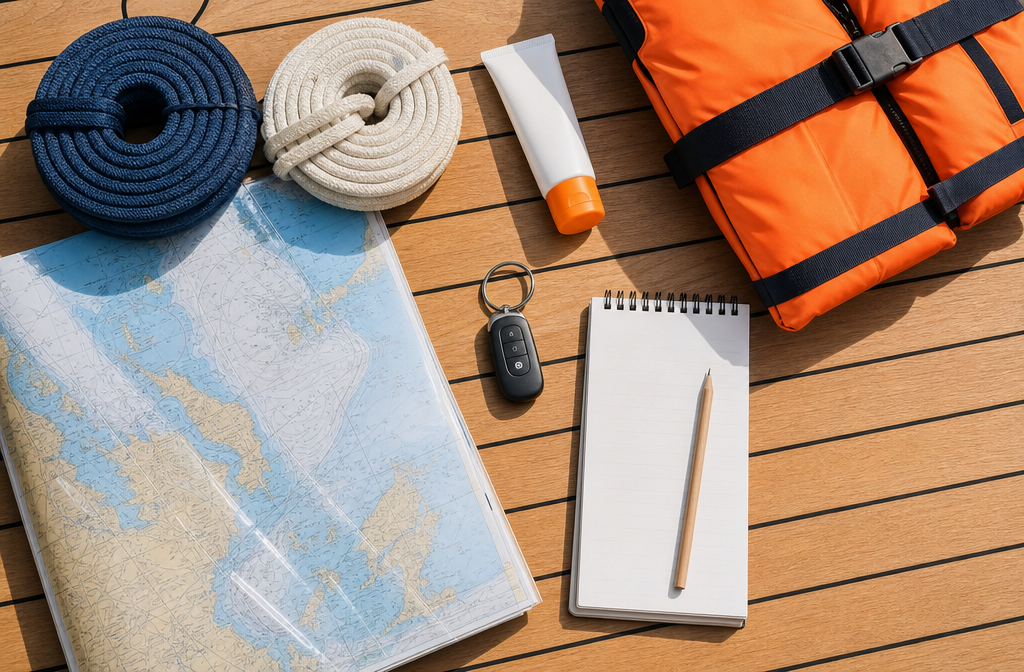
How does the onboard technology work on a houseboat?
Modern charter boats are designed so that no technical prior knowledge is required. The briefing covers all relevant systems.
Important onboard systems:
- Motor and control: Simple levers for forward, reverse, and steering.
- Fresh water and wastewater: Tanks must be checked regularly and emptied at disposal stations.
- Electricity: Mostly via shore power in the harbor or generator. Keep an eye on consumption.
- Heating: Often available on modern boats, important for spring and autumn tours.
Frequently asked questions about the first houseboat vacation
Do I need a license for a houseboat in Germany? Not on most German inland waters. For boats under 15 meters in length and with a certain engine power, instruction by the rental company is sufficient.
How long does the instruction take before the first houseboat trip? Typically 1-2 hours. During this time, steering, safety systems, locks, and docking are explained.
Can you travel on a houseboat with pets? Many rental companies allow dogs on board, often for a small extra charge. Inquire when booking.
What happens if the boat breaks down? Reputable rental companies offer 24-hour breakdown assistance. The number should always be readily available.
How far can you travel per day with a houseboat? Realistically, 20-40 kilometers per day, depending on locks, breaks, and weather.
Is a houseboat vacation also recommended in autumn? Yes, especially for nature lovers. Less busy, cheaper prices, spectacular autumn colors on the shore.
What to do on a houseboat in bad weather? Anchoring, board games, books, discovering the onboard kitchen. Or exploring a nearby place on foot.
How safe is a houseboat for non-swimmers? Safe with a life jacket. Non-swimmers should always wear a vest on deck and be particularly careful when docking.
Ready for your houseboat vacation?
The conclusion after the first houseboat trip is clear: this type of vacation is more accessible, relaxed, and unforgettable than expected. Once you've slept on the water, you won't want to go back to a hotel.
The next step is simple: select your route, determine your boat size, secure your date. Everything else will fall into place on the water.
Ready for your houseboat vacation? Book your houseboat now with Campcruisers and start your next adventure on the water relaxed.
Houseboat Cost Calculator
Boat charter (estimated):
Fuel + mooring (approx.):
Total approx.:
Per person approx.:
 English
  German
  Spanish
  Italian
  Polish
  Dutch
Dutch  French
  Danish