
Every year, thousands of houseboat, sailing, and motorboat drivers share the same space on German inland waterways – and yet, surprisingly many beginners don't know that there's a unique, unwritten greeting culture on the water, which is just as binding as any traffic rule. Those who know the Houseboat etiquette: How do you greet each other on the water? not only travel safer but are immediately accepted by the water community as one of their own.
The most important things in brief: A friendly, respectful greeting culture prevails on the water. A short wave, a nod, or a single horn signal when passing are standard. Those who know these unwritten rules travel more relaxed and are received more warmly.
What you should know:
- On rivers and canals, you generally greet every oncoming boater – this is both tradition and politeness.
- A simple wave of the hand or a nod is perfectly sufficient; elaborate gestures tend to seem strange.
- Loud shouting or honking without reason is considered rude and is even forbidden on many waters.
- On lakes, the greeting obligation is a bit more relaxed than on narrow river courses where you come very close.
- At night: light signal instead of hand signals – a short flash of the deck lighting is enough.
- Small sport boats and houseboats greet each other; commercial shipping has its own rules.
- Regional differences exist: In Northern Germany and the Netherlands, the greeting culture is particularly pronounced.
- Typical beginner mistakes: being too loud, approaching too closely, or completely ignoring the greeting.
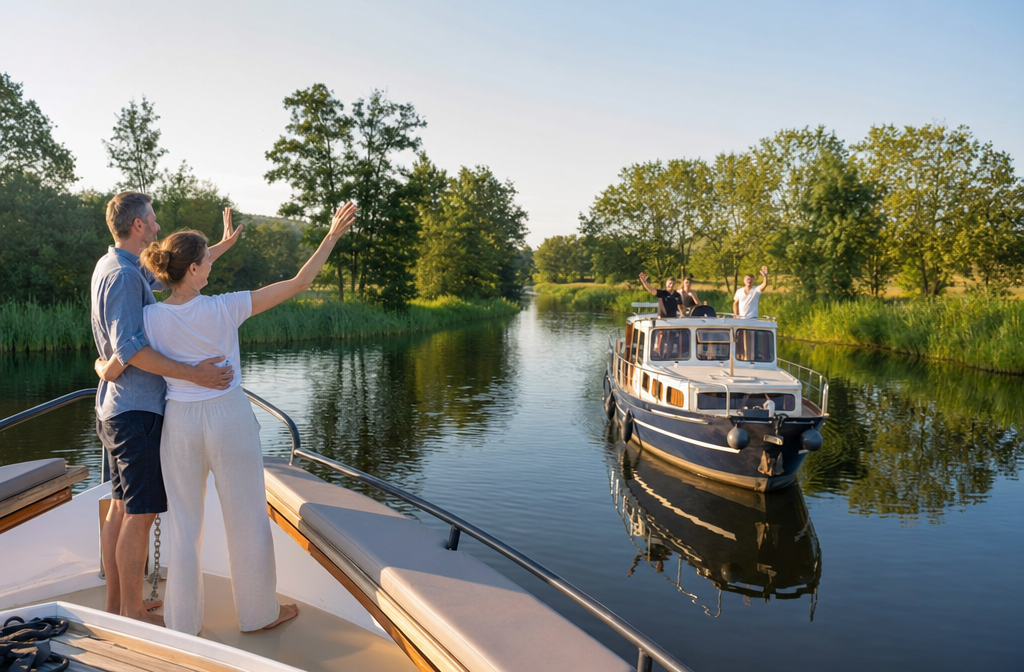
What are the basic rules for greeting on houseboats?
Anyone who rents or owns a houseboat automatically assumes responsibility for respecting the waterways community. The most important basic rule is: Greet everyone you meet on the water — whether they are sailors, motorboat drivers, or another houseboat. This community is small, and an ignored greeting stands out.
Basic rules at a glance:
- Hand wave is the universal greeting on the water and always works.
- Nod (a short nod of the head) is the calmer version, especially when hands are on the helm.
- A short horn blast (one tone) is common on rivers when overtaking or passing narrow sections — but not a substitute for a greeting.
- Greetings are reciprocated. Anyone who receives a greeting and ignores it is considered rude.
- At locks and mooring areas, the duty to greet is intensified because you are in close proximity there.
Decision rule: If you are unsure whether a greeting is appropriate — just greet. On the water, one greeting too many is better than none.
How to politely greet other boaters — and what really works?
A friendly greeting on the water doesn't have to be elaborate. The simplest and most respectful form is an raised arm with an open hand, held briefly and then lowered again. Not a wave like saying goodbye at the train station — more of a calm, relaxed signal.
- Stay on course while greeting: Never let yourself be distracted or change course just to wave.
- Eye contact seek before waving — this makes the greeting appear personal and not mechanical.
- At greater distances, a clearer hand signal is sufficient; when passing closely, a nod is enough.
- On sailboats, the helmsman often greets; on houseboats, anyone on deck can do it.
Common mistake: Waving too enthusiastically like a tourist on the beach often appears comical to experienced boaters. Staying calm and composed is the right attitude.
Is waving or nodding better when passing?
Both are acceptable — the choice depends on the context. Waving is more visible and friendly, nodding is more discreet and often preferred by experienced boaters.
| Situation | Recommended greeting form |
|---|---|
| Narrow canal, slow speed | Nodding or a short wave |
| Open river, medium distance | Hand wave |
| Large lake, far distance | Clear wave or horn |
| Lock or mooring | Nodding + verbal greeting possible |
| Night or dusk | Short light signal |
Rule of thumb: The closer you pass each other, the more personal the greeting can be. On narrow canals, a friendly "Moin!" or "Hallo!" is absolutely normal.
Greeting etiquette for beginners on houseboats — how to start right
Anyone renting a houseboat for the first time is often surprised at how active communication is on the water. Don't panic — the rules are simple and quickly become a habit.
Step-by-step for beginners:
- In the first few hours, observe how other boaters greet each other — you'll quickly learn the local pace.
- Start with a simple hand wave; that's always correct.
- Return every greeting you receive — even if you're busy.
- At locks: Actively talk to other boaters, ask for directions or about the weather — that is encouraged.
- Avoid loud music or shouting over long distances; this disturbs others and is considered disrespectful.
Good news for Campcruisers customers: Those who book a houseboat through Campcruisers usually receive a brief introduction to local customs during check-in — feel free to ask.
Differences between greetings on rivers and lakes
On rivers and canals, you get much closer to other boats than on open lakes, which makes the greeting culture more intense. On lakes, the distance is greater, so greeting is more optional — but never wrong.
- Rivers and canals: Narrow space, slow travel, frequent eye contact. Greetings are almost always exchanged here, and an ignored greeting is immediately noticeable.
- Lakes: More space, higher speeds, less eye contact. Greeting is more voluntary, but still common when encountering each other near the shore or when anchoring.
- Locks: Intensive encounter zone — communication is mandatory here, not just etiquette.
Are there regional differences in greeting on houseboats?
Yes, and they are quite noticeable. In Northern Germany, especially on the canals around the Mecklenburg Lake District, the greeting culture is very pronounced. In the Netherlands and France — popular houseboat destinations — a strong greeting tradition also applies.
- Northern Germany / Mecklenburg Lake District: "Moin" as an all-purpose greeting, also on the water. Very friendly atmosphere.
- Bavaria / Alpine Foreland: A bit more reserved, but a nod is always returned.
- Netherlands: Strong boating tradition, very active greeting culture, often also verbal greetings.
- France (Burgundy, Alsace): Friendly waving is standard; "Bonjour!" on locks is almost obligatory.
Tip: Adapt your greeting style to the region. In the Netherlands, a silent greeting seems almost impolite; in Bavaria, it is perfectly normal.
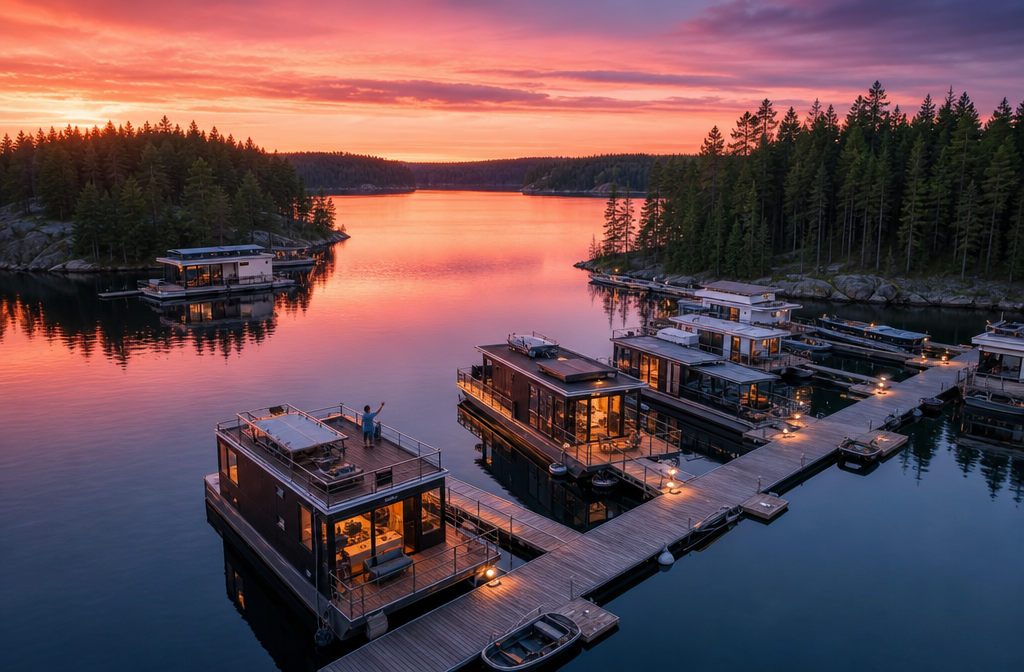
Which gestures should be avoided on a house boat?
Some gestures that seem harmless on land can be misunderstood on the water or considered disrespectful. Anyone who really wants to understand house boat etiquette: How do you greet each other on the water? must also know what one should refrain from.
Gestures and behaviors to avoid:
- Honking without reason: Multiple or long honking signals danger — never use it as a greeting.
- Approaching too closely, just to exchange a greeting: This creates waves and is dangerous.
- Hand gestures that signal impatience (e.g., waving gestures): Can be misunderstood as a request to move aside.
- Shouting loudly over long distances: Disturbs the peace and seems intrusive.
- Ignoring lock keepers: They are not service staff but authority figures on the water — always greet them and communicate respectfully.
Greeting rules for small and large boats — who greets whom first?
Generally, there is no strict hierarchy for greeting on the water, but there are conventions. Smaller sports boats and house boats greet each other at eye level; different rules apply to commercial shipping.
- House boats and sports boats: Greet each other, no fixed "who first" principle.
- Towards commercial shipping (freighters, passenger ships): No active greeting expected — keeping distance is more important than waving.
- Sailing boats towards motorboats: Traditionally, the motorboat driver greets first because they are more maneuverable. However, this rule is not strictly followed everywhere.
- Larger houseboats with crew: Often, the person at the helm or on deck greets.
How does one greet differently during day and night?
During daylight, a wave or nod is the clear choice. At night or during twilight, visibility is limited, which is why visual signals with lights replace hand gestures.
- During the day: Waving, nodding, a brief verbal greeting at close range.
- Twilight: A more distinct wave with a brightly colored garment or a brief flash of deck lights.
- At night: A brief flash of deck lights or a short flashlight beam is the usual nighttime greeting — never blind with the main lights.
- Important: At night, quiet on the water is particularly important. Loud calls or music are absolutely inappropriate.
Are loud or quiet greetings more appropriate on houseboats?
Quiet greetings are almost always the better choice. Sound travels far on water, and what is considered a friendly call on land quickly sounds like noise on the water.
- Verbal greetings ("Hello!", "Good morning!") are only appropriate at very close range — for example, when docking or in a lock.
- On open waters, loud calls are disruptive to other boaters and residents.
- Sounding a horn as a greeting is not intended on most German inland waterways and can cause confusion.
Motto: On the water, less is more. A quiet, respectful greeting is always better received than a loud one.
Which boats do you greet — and which ones not?
Not every watercraft expects or understands a recreational greeting. Houseboat etiquette: How to greet each other on the water? clearly distinguishes between recreational vessels and work vessels.
- Greetings: Other houseboats, sailboats, motorboats, canoes and kayaks, rowing boats — in short, all recreational vessels.
- No active greeting required: Cargo ships, push barges, passenger ships of commercial navigation. These do not have the time or occasion to respond to recreational greetings.
- Special case Police/Water Protection: Behave in a friendly and respectful manner, but avoid excessive waving — this can be misunderstood as a signal for attention.
- Rowing boats and paddlers: Always greet them — they are particularly vulnerable in traffic and appreciate respect.
Frequently asked questions about houseboat etiquette
Do I really have to greet everyone? On German inland waterways, greeting recreational boats is a firm tradition. There is no legal obligation, but those who greet are perceived as part of the community — and that makes the vacation more enjoyable.
What do I do if my greeting is not returned? Don't take it personally. The other boater might be distracted, in a difficult maneuvering situation, or simply inexperienced. Greeting once is enough.
Can I honk on the water to say hello? No. Honking signals have fixed meanings on inland waterways (e.g., intention to overtake, warning). Honking as a greeting is not intended and can cause confusion or fright.
How do I greet in a lock? In locks, direct eye contact and a friendly "Good morning" or "Hello" is completely normal. You are close to each other and have time for a short conversation — this is appreciated by most boaters.
Does the greeting obligation also apply to children on board? Children are, of course, allowed to wave and greet — this is even particularly popular. It is important that they do not lean over the railing or put themselves in danger while doing so.
How should I behave towards locals on the shore? A friendly wave to walkers or anglers on the shore is always welcome. It shows respect for the local community and leaves a good impression.
What is the difference between a greeting and a distress signal? Distress signals are standardized: repeated waving with both arms means "I need help". A normal greeting is a single, calm hand gesture. Mix-ups rarely happen, but those who need help should signal clearly and distinctly.
Do I need to react differently to motorboats and sailboats? No. The form of greeting is the same. Traditionally, motorboat drivers are expected to show a little more consideration towards sailors (because sailors depend on the wind), but there is no difference in greetings.
Conclusion: With the right etiquette, every trip is better
Houseboat etiquette: How do you greet each other on the water? is not a complicated set of rules – it is the common denominator of a community that loves the same thing: free travel on the water, peace, nature, and mutual respect. Those who know these unwritten rules start their vacation more relaxed, are received more warmly, and contribute to making life on the water pleasant for everyone.
Your next steps:
- Practice the calm hand wave – it sounds trivial, but a confident, relaxed greeting immediately makes a good impression.
- Before your trip, inform yourself about the specifics of the region you are traveling in.
- Ask about local customs at check-in – it costs nothing and brings a lot.
- Take the time for a short conversation at locks; the best travel tips emerge there.
Ready for your houseboat vacation? Book your houseboat now with Campcruisers and start your water adventure with the right feeling.


 English
  German
  Spanish
  Italian
  Polish
  Dutch
Dutch  French
  Danish