
Over 11,000 kilometers of navigable inland waterways crisscross France, Germany, and the Netherlands alone — and every year more travelers decide to experience these routes not from the shore, but directly from the water. Anyone who deals with the topic Houseboat types explained: From Pénichette to Yacht quickly realizes: The differences between the individual boat types are enormous and largely determine how relaxed, affordable, or adventurous the vacation will be.
In short: There isn't just one type of houseboat. From the handy Pénichette for river beginners to the fully equipped motor yacht for experienced skippers, the market covers a broad spectrum — in price, size, comfort, and license requirements.
The most important things at a glance
- Eine Pénichette is the classic entry-level boat for canals and rivers — no boat license required in France, easy to steer.
- Houseboats for living (Floating Homes) are usually stationary and not suitable for vacation tours.
- Motor yachts offer the highest comfort, but usually require a license and more experience.
- For families with children, wide, shallow-draft canal boats are the safest choice.
- Rental prices vary greatly: a Pénichette costs from approx. 700 Euros per week, a yacht can cost 3,000 Euros or more.
- Many European waterways allow you to drive without a license if the engine power is below a certain threshold.
- Small Pénichettes are unsuitable for large lakes or coastal areas – they are designed for calm inland waters.
- Used houseboats often have hidden maintenance costs; a technical inspection is mandatory before purchase.
- Winter hardiness depends heavily on the boat type and material: steel hulls withstand frost much better than GRP boats.
What is the difference between a Pénichette and a normal houseboat?
Eine Pénichette is a compact, shallow-draft canal boat specifically designed for inland waters and lock passages. A "normal houseboat" is a much vaguer term that can encompass anything from stationary floating homes to large motorboats.
The decisive difference lies in the construction and intended use:
| Characteristic | Pénichette | Floating Home | Motor Yacht |
|---|---|---|---|
| Mobility | High (Travel boat) | None (stationary) | High |
| Draft | Very shallow (approx. 0.8 m) | Variable | Medium to high |
| Driving licence | Often not necessary | Omitted | Mostly required |
| Price Rent/Week | from 700 Euros | from 500 Euro (berth) | from 2,500 Euro |
| Suitable for | Canals, rivers | Permanent living | Lakes, coast |
The Pénichette was popularized in France by the company Locaboat in the 1970s and is today the most rented touring boat on European inland waterways. Floating Homes, on the other hand, are more like holiday apartments on the water — you sleep on the water but don't go anywhere.
What types of houseboats are there in Europe?
Europe offers an impressive variety of boat types for water holidays. The most common categories at a glance:
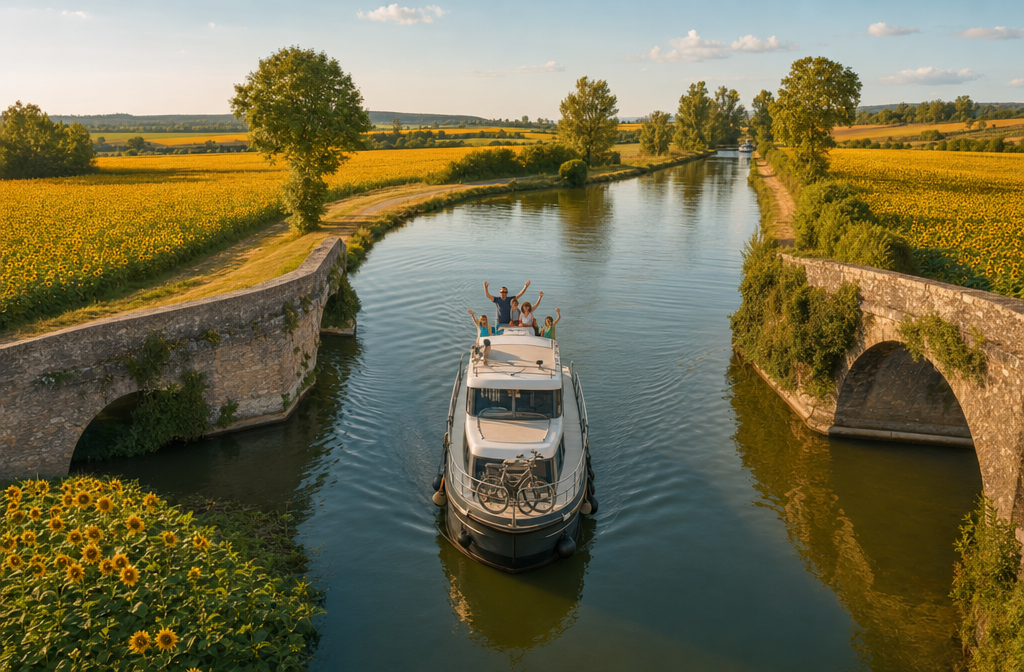
1. Pénichette / Canal boat The classic touring boat for France, Burgundy, the Netherlands and Germany. Wide, stable platform, easy to steer, ideal for lock passages.
2. Narrowboat Typical for British canals: very narrow (approx. 2.1 m), long (up to 20 m), with characteristic paintwork. Designed for narrow English canal locks.
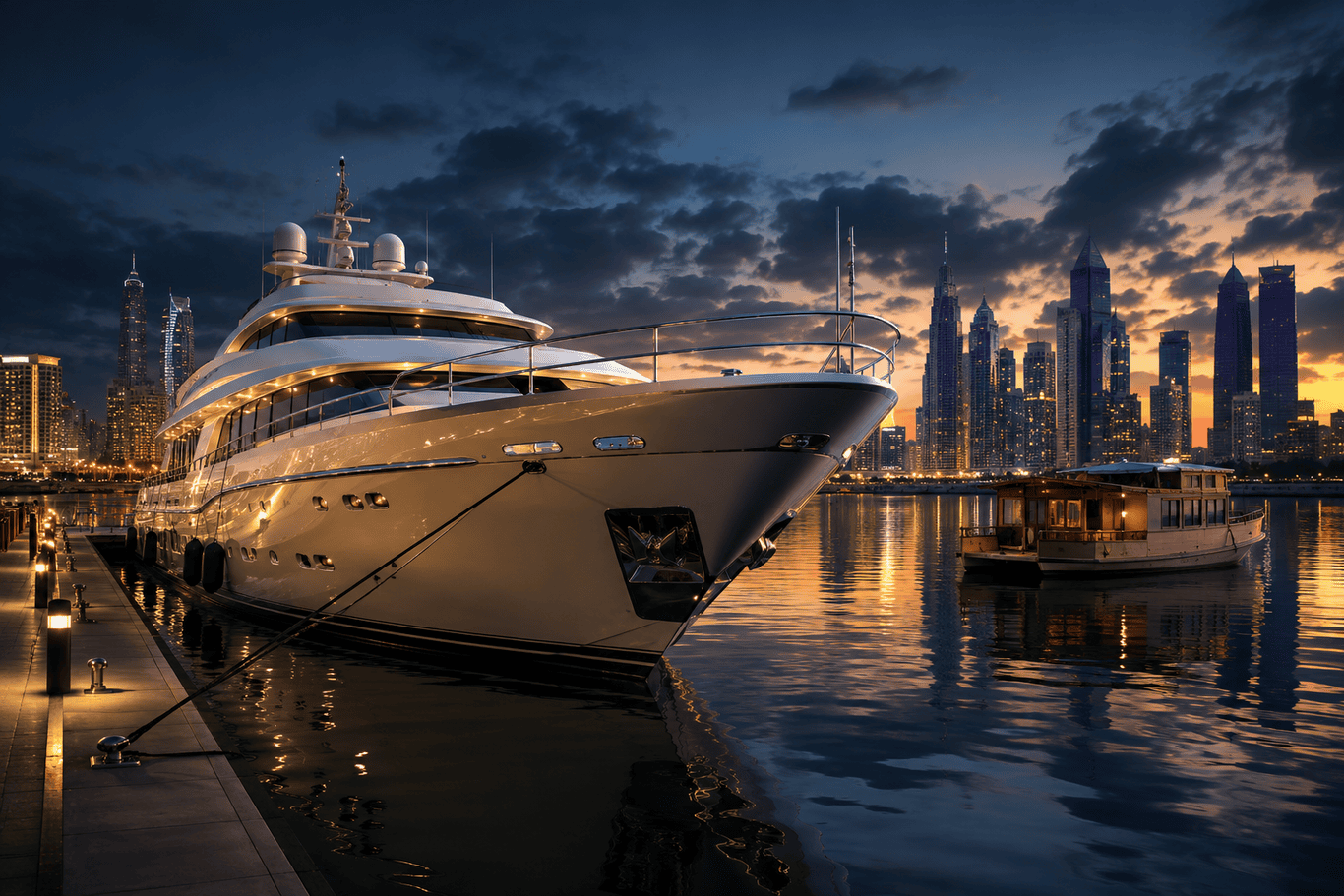
3. Motor yacht / Cruiser Faster, more comfortable boats for larger lakes and rivers. Often with cabins, fully equipped kitchen and bathroom. Requires a boat license in most countries.
4. Catamaran Two parallel hulls offer more stability and space. Popular on the Mediterranean and in Croatia. For experienced skippers.
5. Floating Home / Houseboat for living Stationary constructions on pontoons or floats. Popular in Amsterdam, Hamburg and Berlin as permanent residences or holiday rentals.
6. Houseboat yacht (Hybrid) Combination of living comfort and driving characteristics of a yacht. Larger than a Pénichette, but more comfortable to live in than a classic motor yacht.
Which type of houseboat is most affordable for beginners?
For beginners without boating experience, the Pénichette is the best choice — it is affordable, stable, and can be operated without a license in many areas.
Those vacationing on the water for the first time should pay attention to the following criteria:
- Wide, flat hull: Prevents rocking and provides security
- Low speed: Canal boats travel at a maximum of 8–10 km/h, which gives time to react
- On-site instruction: Reputable rental companies offer a 1–2 hour introduction
- Manageable size: A 4-cabin boat for up to 8 people is ideal for starting out
Typical beginner mistake: Booking a boat that is too large for the first trip. It is better to start with a 2-cabin Pénichette and learn the locks before switching to a 6-cabin yacht.
How much does a houseboat cost — to buy or rent?
Renting is the more sensible option for most vacationers. Purchase prices for houseboats start at around 30,000 Euros for older used boats and range up to over 500,000 Euros for new motor yachts.
Rental prices (guideline values 2026, high season):
- Pénichette (2 cabins): 700–1,200 Euros/week
- Pénichette (4 cabins): 1,200–2,000 Euros/week
- Motor yacht (4–6 people): 2,500–5,000 Euros/week
- Luxury yacht / catamaran: 5,000–15,000 Euros/week
In addition, there are fuel, security deposits (often 500–2,000 Euros) and optional extras such as bicycles or catering packages. Book your houseboat now at Campcruisers and compare current offers directly.
Can you operate a houseboat without a boat license?
Yes, this is possible in many European countries. In France, the Netherlands, Belgium, and Ireland, boats up to a certain engine power (usually under 15 hp) can be operated without a license, provided instruction has been given by the rental company.
Country-specific rules (as of 2026):
- France: No license required for boats up to 6 hp on inland waters; for more powerful engines, instruction from the rental company is often sufficient
- Germany: On federal waterways, the "Sportbootführerschein Binnen" (inland boat license) is mandatory from a certain engine power
- Netherlands: For boats under 15 m length and under 20 km/h, no license required
- Croatia: License generally required for motorboats over 5 kW
Important: Rules change, and rental companies have their own requirements. Always ask the provider directly in advance.
Which houseboats are best suited for families with children?
For families with children, wide canal boats and Pénichettes with large aft decks are the safest and most practical choice. The low gunwale and flat deck allow children to move around freely without parents constantly having to be on high alert.
What families should pay attention to:
- Safety net or railing around the deck (many rental companies offer this as an option)
- Separate cabins for parents and children
- Fully equipped kitchen on board to be able to prepare baby food or children's meals
- Shallow draftso that the boat is also safe in shallow waters
- Slow cruising speed: Canal boats are ideal because you can moor easily at any time
What are typical problems on a first houseboat holiday?
The most common problems for first-time renters are lock passages, misjudged time requirements, and minor technical issues such as water supply or power connection.
The Top 5 Pitfalls:
- Planning too many kilometers per day: On canals, you realistically cover 20-30 km per day, not 80 km like in a car.
- Underestimating locks: Each lock costs 15-45 minutes. That adds up quickly.
- Mooring without practice: The first mooring is almost always chaotic. Just practice before entering a full harbor.
- Not keeping an eye on water supply: Tanks are limited. Refill regularly, especially for families.
- Ignoring the weather: Canal boats are unpleasant in wind and rain. Flexible route planning is worth its weight in gold.
Are houseboats safe for people without boating experience?
Yes, canal boats and Pénichettes are specifically designed for inexperienced drivers. The speed is low, the boats are stable, and the inland waterways are well-marked.
Safety-related points:
- Always have life jackets for children on board
- Keep a lifebuoy and rope readily accessible
- Never alone on the upper deck while underway
- Complete the briefing from the rental company
- Have the rental company's emergency number saved
What are the disadvantages of small Pénichettes compared to yachts?
Small Pénichettes are limited to calm inland waters and offer significantly less comfort and speed than motor yachts.
Pénichette vs. Motor yacht — the honest comparison:
- Speed: Pénichette max. 10 km/h vs. Yacht 20–30 km/h
- Seaway: Pénichettes are unsuitable for lakes with waves
- Comfort: Yachts often have air conditioning, hot water showers, better equipment
- Driving licence: Pénichette often without, yacht almost always with
- Kosten: Pénichette significantly cheaper to purchase and operate
- Areas: Pénichette limited to canals/rivers, yacht also on lakes and coast
Anyone planning a coastal holiday in Croatia or on Lake Constance is much better served by a yacht or a catamaran.
What should you consider when buying a used houseboat?
When buying a used houseboat, hull condition, engine hours, and mooring costs are the three most critical factors. Many buyers underestimate the ongoing costs after purchase.
Checklist before buying:
- Professional shipyard inspection (hull, drive, electrics)
- Have engine hours documented (under 1,000 hours is considered good)
- Check mooring contract (costs, termination)
- Request insurance history
- Factor in winter storage costs
- Are registration and ship's papers fully available?
Common mistake: Comparing only the purchase price without considering the annual operating costs (mooring, insurance, maintenance, winter storage). These can easily amount to 5,000–15,000 Euros per year.
How winter-resistant are different houseboat models?
Steel-hulled houseboats and Pénichettes withstand winter much better than GRP boats (glass-fiber reinforced plastic). Floating Homes on concrete pontoons are generally the most winter-resistant.
Winter resistance by type:
- Steel hull (Pénichette, Narrowboat): Very robust, tolerates frost and ice well, but check corrosion protection regularly
- GRP hull (motor yacht, catamaran): More sensitive in severe frost, should be taken out of the water
- Floating Home (concrete/steel): Mostly in the water year-round, well insulatable for permanent residents
- Wooden hull: Most complex maintenance, requires regular treatment and dry winter storage
Anyone operating their boat in Northern Europe should definitely pay attention to frost protection in the water pipes and winterize the engine cooling system.
Which types of houseboats are suitable for rivers and which for lakes?
For Rivers and canals Pénichettes and Narrowboats are ideal — shallow draft, slow speed, easily maneuverable in locks. For Lakes and coastal waters you need deep-draft, seaworthy boats like motor yachts or catamarans.
The rule of thumb: The calmer and narrower the water, the better suited a wide, flat canal boat is. The more open and wind-prone the area, the more important stability, engine power, and a license are.
Area recommendations:
- Burgundy/France: Pénichette, perfect
- Netherlands: Canal boat or small cruiser
- Mecklenburg Lake District: Motor yacht or houseboat cruiser
- Croatia/Adriatic: Sailing yacht or catamaran
- Lake Constance: Motor yacht with a license
Frequently asked questions
Do I need a license for a Pénichette in France? In France, no license is required for boats with low engine power on inland waterways if the rental company provides an introduction. The exact rules depend on the area and engine power – always ask the rental company.
How many people fit on a Pénichette? Depending on the model, between 2 and 12 people. Typical family Pénichettes offer 4 cabins for 6–8 people.
How much does a houseboat vacation for a family cost for a week? For a family of four with a 2-cabin Pénichette in the off-season, total costs of 1,000–1,800 euros (including fuel and food) are realistic.
Can you take pets on a houseboat? Many rental companies allow small dogs on board. This must be indicated when booking, often for a small extra charge.
How long does a typical houseboat tour take? Tours of 7 to 14 days are popular. Shorter weekend trips (3–4 days) are also bookable but less common.
Is a houseboat vacation also suitable for older people? Yes, especially Pénichettes with large, level decks are well suited for older travelers. With limited mobility, one should pay attention to boats with many steps or narrow hatches.
What happens if the boat breaks down? Reputable rental companies offer 24-hour breakdown assistance. The boat is insured, and the rental company will arrange for repair or a replacement boat.
Which area is recommended for a very first houseboat vacation? Burgundy in France is considered an ideal area for beginners: quiet canals, many locks to practice on, beautiful scenery, and good infrastructure.
Ready for your houseboat vacation?
Houseboats are no longer a niche product – they are a real alternative to a classic camping vacation, with the advantage that the scenery changes daily and your bed is always with you. Whether it's a compact Pénichette for your first canal trip or a comfortable motor yacht for experienced water lovers: the right type of boat makes the difference between a stressful and an unforgettable vacation.
The next step is simple: choose your area, decide on the boat type, check the season – and then book. Ready for your houseboat vacation? Book your houseboat now with Campcruisers and start your adventure on the water.
Meta title: Houseboat types explained: From Pénichette to Yacht


 English
  German
  Spanish
  Italian
  Polish
  Dutch
Dutch  French
  Danish