
Less than 15 percent of all Germans have so far had a vacation on the water, although houseboats have been among the fastest-growing vacation types in Europe for years. For those who have never been on board, the question naturally arises: What does a typical day on a houseboat actually look like? A typical day on the houseboat: How the vacation works, is far more relaxed, adventurous, and flexible than most travelers expect. No fixed schedule, no hotel buffet, no wake-up call, but real freedom on the water.
What to expect on a typical day on the houseboat
A houseboat vacation does not follow a rigid program. The day begins when you want and ends where you want. This is the biggest difference to almost any other form of vacation.
In the morning, you usually wake up with the gentle rocking of the boat and the sound of the water. Breakfast on deck, coffee in hand, ducks on the water. Then the group decides together: Do we continue today or stay here? At noon, you moor at a village landing, buy fresh bread and local specialties. In the afternoon, you head back on the water or explore the surroundings on foot. In the evening, you anchor on a quiet bank and cook together on board.
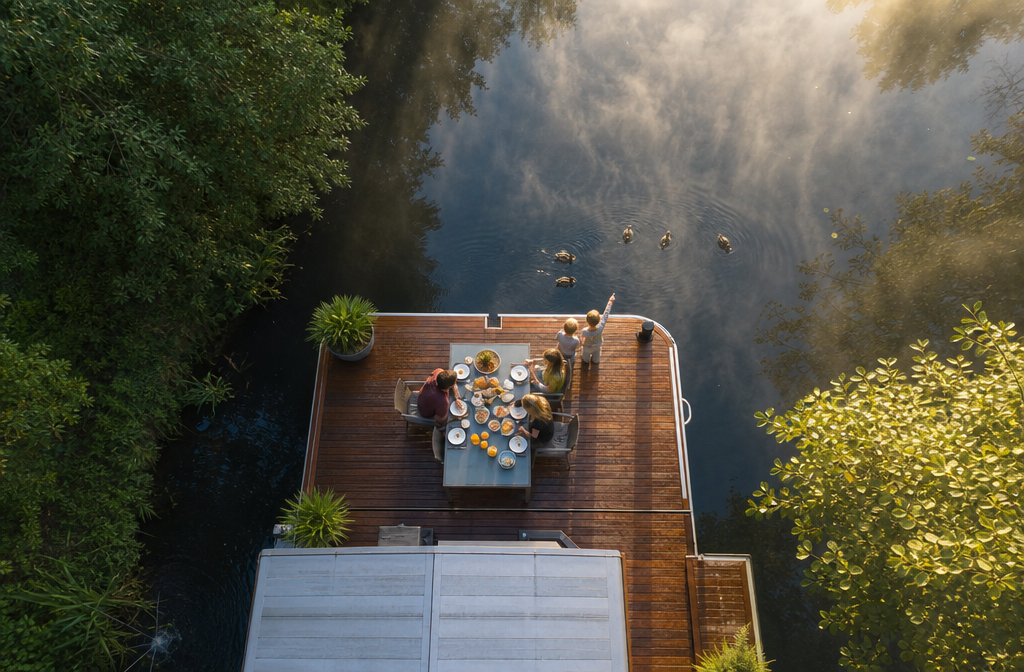
The rough daily schedule at a glance:
- 7:30–9:00 AM: Wake up, breakfast on deck
- 9:00 AM–12:00 PM: Set off, first leg of the day's journey
- 12:00 PM–2:00 PM: Moor, lunch, shopping
- 2:00 PM–5:00 PM: Continue journey or excursion on land
- 5:00 PM–7:00 PM: Find anchorage, prepare dinner
- 7:00 PM: Dinner, sunset, relax
What does a houseboat holiday really cost?
The rental costs for a houseboat range from 800 to 3,500 euros per week, depending on the season, area, and boat size. However, the basic rent is not the only expense.
Additional costs that beginners often forget:
| Cost element | Approximate costs |
|---|---|
| Deposit | 500–1,500 euros (refundable) |
| Fuel | 50–200 Euro/week |
| Marina fees | 5–25 Euro/night |
| Final cleaning | 80–200 Euro |
| Additional insurance | 30–80 Euro |
| Groceries on board | 30–60 Euro/person/day |
Those traveling with four to six people share the costs accordingly. A houseboat vacation can then be cheaper per person than a comparable hotel room. Campcruisers offers transparent price overviews so that no nasty surprises await.
What requirements do I need to drive a houseboat?
In most European regions, no boat license is required to rent a houseboat. This applies especially in France (Burgundy, Camargue), the Netherlands, Ireland, and Germany on certain inland waterways.
Those who want to rent a houseboat usually need:
- Minimum age of 18 years (sometimes 21 years)
- Valid ID card or passport
- Credit card for the deposit
- A short briefing by the rental company (takes 1–2 hours)
On some German waters, such as the Rhine or the Danube, a "Sportbootführerschein Binnen" (inland boat license) is required. Those traveling on canals in Mecklenburg-Vorpommern or in Holland, on the other hand, need nothing but common sense and attention.
How difficult is it to steer a houseboat without experience?
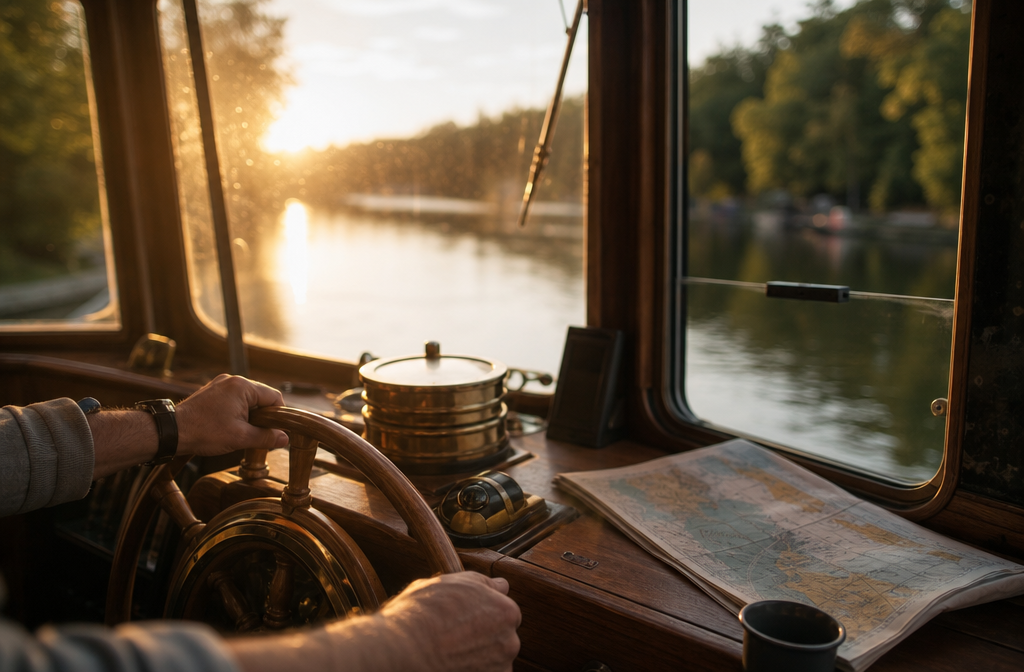
Honest answer: less difficult than expected, but not trivial. Most houseboats travel at a maximum of 10–12 km/h, react sluggishly to steering movements, and do not have a reverse gear like a car.
The biggest challenges for beginners:
- Docking and undocking in wind or current
- Passing through locks (narrow passages, changes in elevation)
- Bridges and tunnels assess with the correct clearance height
After half a day on the water, most first-time drivers have understood the basic principles. The briefing from the rental company covers exactly these points. Important: always drive slowly, never react hectically, and dock if unsure.
Are houseboats also suitable for families with children?
Yes, very much so. Houseboats are one of the most family-friendly forms of vacation there is, because children have space, can experience nature directly, and can actively help.
What families should know:
- Children under 12 years of age should always wear a life jacket on deck
- Most houseboats have railings and safety nets
- Children aged 8 and over can steer themselves under supervision
- Shallow water areas like Mecklenburg Lake District or Holland are ideal for families
Families with young children should choose areas without strong currents and without many locks. Experienced houseboat rental companies will provide appropriate recommendations when booking.
Which waters are best suited for a houseboat vacation?
The best areas for beginners are quiet inland waterways with little traffic, many mooring spots, and beautiful landscapes. License requirements and difficulty levels vary depending on the area.
Top areas for houseboat vacationers:
- Mecklenburg Lake District (Germany): Perfect for families, many lakes, no license required
- Burgundy / Canal du Midi (France): Gentle canals, including locks, fantastic landscape
- Holland (Netherlands): Densely networked canal network, easy to navigate
- Shannon (Ireland): Calm rivers, green landscape, very relaxed
- Masuria (Poland): Affordable, natural, few tourist crowds
For a typical first-time experience, the Mecklenburg Lake District or Holland is the best choice.
What is included in the basic equipment of a houseboat?
A modern rental houseboat is fully equipped. Anyone who books a houseboat will find everything they need for daily life on board.
Standard equipment on most houseboats:
- Fully equipped kitchen (stove, refrigerator, pots, dishes)
- Sleeping cabins with beds and bedding
- Shower and toilet (often also an outdoor shower)
- Helm with navigation and charts
- Sun deck with loungers
- Life jackets for all passengers
- Mooring lines, anchor, boat hook
Luxury models additionally offer air conditioning, dishwasher, outdoor kitchen, or even a dinghy. When booking on Campcruisers, you can see exactly what is included in each boat.
How much space is there on a typical houseboat?
A houseboat for four to six people is usually 10 to 14 meters long and 3 to 4 meters wide. This corresponds approximately to the living space of a small holiday apartment.
The room layout is compact but functional. Two to three sleeping cabins, a common room with a dining area, a kitchen, and a bathroom. In addition, there is the outdoor deck, which becomes the actual living room in good weather. Those who suffer from claustrophobia or need a lot of storage space should choose a larger model.
Can you also travel by houseboat in winter?
Basically yes, but there are some restrictions. Many rental companies only open their fleets from March or April and close again in October or November.
Winter trips are mainly possible in Southern France or on the Canal du Midi, where temperatures remain mild. In Germany and the Netherlands, houseboats are often frozen or unavailable in winter. Those who want to travel in winter should specifically look for winter-capable areas and check the boat's heating equipment.
What are the most common mistakes made by houseboat beginners?
Most mistakes happen when docking, estimating bridge heights, and dealing with locks. Knowing these three points avoids 80 percent of all problems.
The most common beginner mistakes:
- Driving too fast in narrow canals or harbors
- Braking too late when docking (houseboats have a long braking distance)
- Underestimating wind influence when leaving the dock
- Ropes too loose or fastened too tightly
- Lock rules not knowing or ignoring
- Not refuelling in time
All these mistakes can be avoided with instruction and some patience. The golden tip: always drive slower than you think is necessary.
How safe are houseboats for inexperienced captains?
Houseboats are considered a very safe form of vacation, even for beginners without experience. Serious accidents are extremely rare in typical houseboat areas.
The safety equipment of modern rental houseboats is high: life jackets, fire extinguishers, smoke detectors, first-aid kits, and emergency numbers are standard. The instruction by the rental company takes one to two hours and covers all safety-relevant points. Those who adhere to the basic rules (drive slowly, observe the weather forecast, do not steer under the influence of alcohol) are very well taken care of on the water.
Frequently asked questions about houseboat holidays
Do I need a license for a houseboat? In most areas (Holland, France, Ireland, Mecklenburg) no license is required. On certain German federal waterways, a Binnen sports boat license may be required.
How many people fit on a houseboat? Between two and twelve people, depending on the model. For families or groups of friends, there are boats with two to five sleeping cabins.
What happens if I damage the boat? The deposit covers minor damages. For major damages, there is liability insurance, which is often included in the rental or can be booked affordably.
May I anchor anywhere with the houseboat? No. There are designated anchorages and moorings. Wild anchoring is forbidden or restricted in many areas.
How loud is it on a houseboat? When driving, you can hear the engine (relatively quiet), when anchoring it is very quiet. At night, you often sleep better than at home.
Can I bring pets? Some landlords allow dogs on board. This must be specified when booking.
What do I do if the boat breaks down? Every landlord has a 24-hour breakdown service. The number is stored on board.
What is the best way to book a houseboat? Directly through Campcruisers, where you can transparently compare availability, equipment, and prices.
Conclusion: Now is the best time
A typical day on the houseboat: How the vacation unfolds shows one thing above all: This way of traveling is feasible for almost everyone and offers a freedom that no hotel in the world can replicate. No license needed, no prior knowledge, no rigid daily plan. Just water, landscape, and the people you love.
Anyone who has slept on a houseboat, had breakfast on deck, and stood at the helm themselves will surely book again. The first step is the easiest.
Ready for a houseboat vacation? Book your houseboat now at Campcruisers and start your adventure on the water.


 English
  German
  Spanish
  Italian
  Polish
  Dutch
Dutch  French
  Danish