
Quick Answer: Anyone who wants to rent out their property as a private campsite can realistically earn between 30 and 50 Euros per pitch and night in Germany. The key lies in the right equipment, a clear target audience and a professional presence on booking platforms like Campcruisers. Legal permits, insurance coverage and a well-thought-out appearance determine whether your property becomes a real dream destination or remains hidden.
Key Takeaways
- In Germany, over 1.6 million camping vehicles are registered; the market for private pitches is growing strongly.
- According to the Bavarian State Institute for Agriculture, private pitches generate an average of 30 to 50 Euros per night with 100 to 120 occupied days per year.
- From around 4 pitches, campsite regulations apply in most federal states; contact the municipality beforehand.
- Glamping (i.e., camping with comfort) achieves significantly higher prices than a simple pitch on a meadow.
- Campcruisers is the recommended platform to make your private pitch visible online and manage bookings.
- Business liability insurance is mandatory before the first guest arrives.
- Seasonal pitches are easier to operate, but year-round pitches with winter equipment can significantly increase profitability.
- Common mistakes: bad photos, lack of price transparency, and no clear target audience approach.
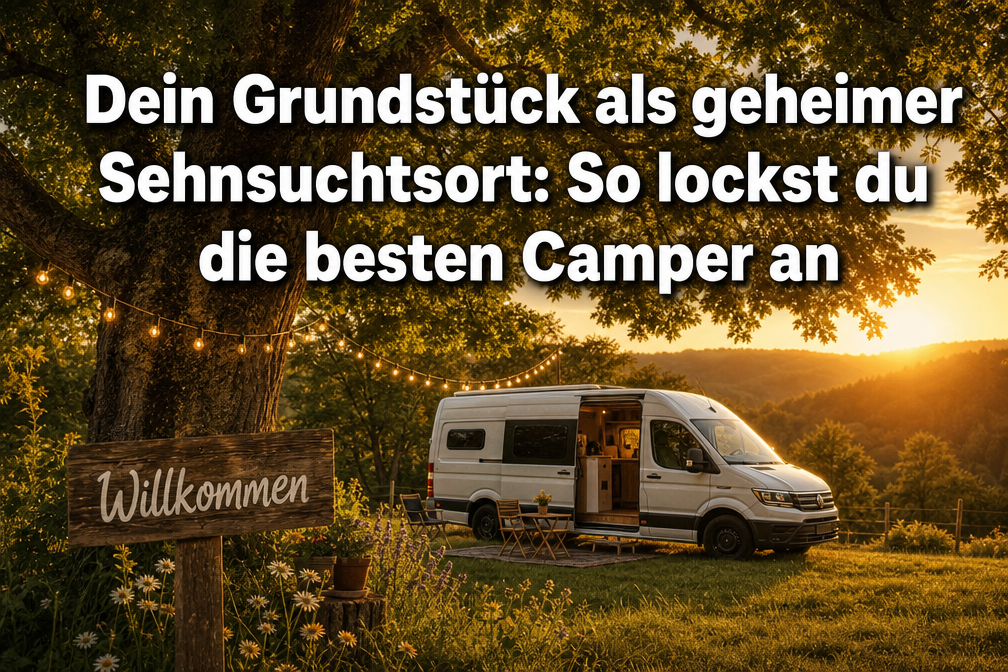
What is glamping and how does it differ from normal camping?
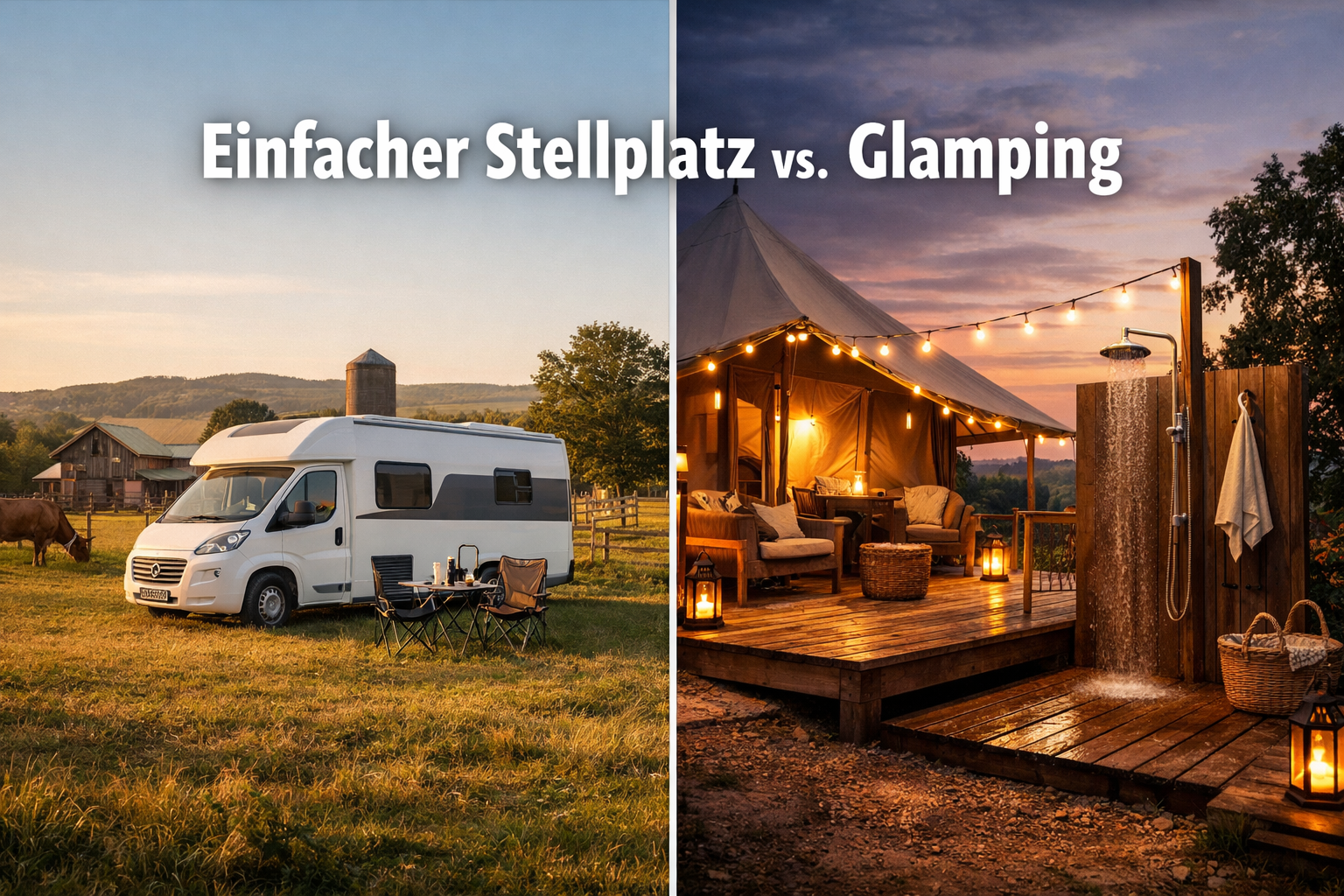
Glamping stands for "Glamorous Camping" and describes overnight stays in nature with upscale amenities. While a normal campsite only offers a level area with power connection, glamping includes extras such as wooden terraces, outdoor showers, safari tents, tiny houses, or elaborate lighting.
The crucial difference lies in the price and the target group:
| Characteristic | Normal campsite | Glamping |
|---|---|---|
| Price range per night | 15 to 35 Euros | 60 to 200 Euros |
| Target audience | Experienced campers, travelers | Couples, families, first-time campers |
| Investment required | Low (500 to 5,000 Euros) | Medium to high (from 10,000 Euros) |
| Booking lead time | Short-term | Often weeks in advance |
| Occupancy | Seasonally strongly fluctuating | More consistent, also off-season |
Those who want to position their property as a secret dream destination will benefit from glamping elements even if a complete glamping concept is not planned. Even a fireplace, a hammock, and a cleanly designed sanitary area will clearly set a site apart from the competition.
How much money can I earn with my property as a campsite?
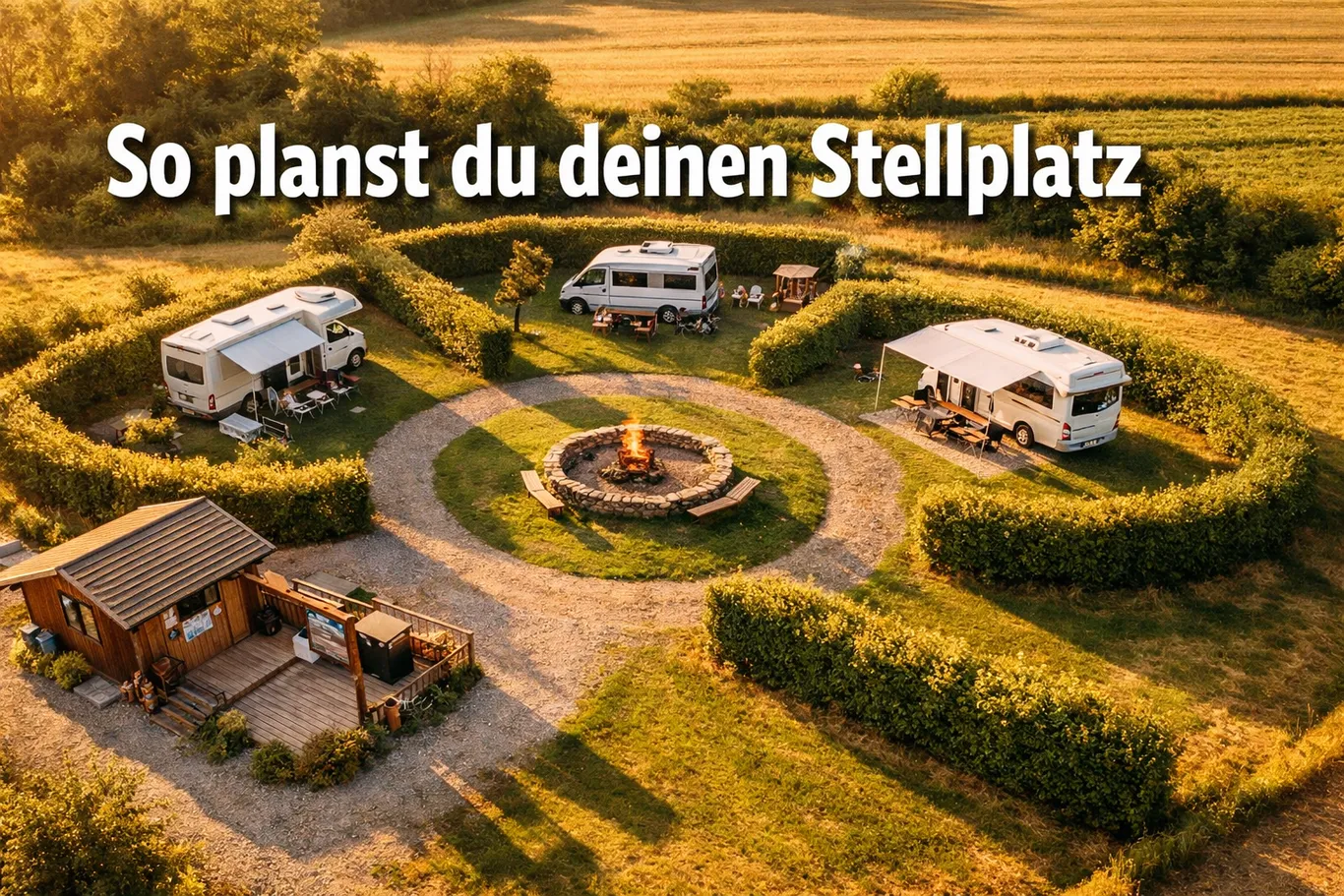
Realistically, between 30 and 50 Euros per pitch per night is achievable, with an average occupancy of 100 to 120 occupied days per year (Source: Bavarian State Institute for Agriculture, 2025). This results in an annual revenue of around 3,000 to 6,000 Euros per pitch.
Those who operate three pitches and offer additional services can build up a solid side income. The following factors influence revenue:
- Location: Proximity to lakes, hiking trails, or tourist highlights increases demand.
- Equipment: Electricity connection, Wi-Fi, and clean sanitary facilities justify higher prices.
- Additional services: Breakfast baskets, farm products, or guided tours increase revenue per guest.
- Season length: Year-round pitches with winter equipment achieve more occupied days.
Don't forget the cost side: Sanitary upgrades in an existing building cost at least 20,000 Euros. Pitch paving costs between 800 and several thousand Euros depending on the ground. In addition, there are insurance, marketing, and ongoing operating costs.
Rule of thumb: Those already operating holiday apartments or agritourism can integrate campsites with significantly less additional effort, as advertising, leisure activities, and organization are already in place.
What permits and official requirements are there for private campsites?
Private campsites require permits in Germany because they are legally considered building structures. The exact requirements vary depending on the federal state and the location of the property.
The most important regulations at a glance:
- Campsite regulations apply in most federal states from 4 pitches.
- The basis is the Building Code (BauGB), especially paragraphs 34 and 35 for external areas.
- For agricultural businesses in Bavaria, according to the revised announcement from 2021, a few pitches in external areas can be approved under certain conditions.
- In Rhineland-Palatinate, up to three camper van pitches are possible as a "concomitant project" of an agricultural business in an external area (Source: Chamber of Agriculture Rhineland-Palatinate, 2022).
Checklist before starting:
- Check the building use ordinance (BauNVO) for your own property.
- Submit a preliminary building inquiry to the municipal administration.
- Read the camping ordinance of the respective federal state.
- For commercial use: Register a business with the Chamber of Industry and Commerce (IHK) or municipality.
- Apply for a building permit from the building supervisory authority.
- Implement fire protection and safety regulations.
- Clarify tourist tax and registration requirements with the municipality.
Important: This article does not replace legal or tax advice. For binding information, always contact a lawyer or the responsible authority.
What insurance do I need for a private campsite?
At least business liability insurance is mandatory before the first guest stays overnight on the property. It protects against claims for damages if a guest is injured on the premises.
Relevant insurance types:
- Property and business liability: Mandatory basis for every provider. Covers personal injury and property damage caused by third parties on the premises.
- Building and contents insurance: Useful if sanitary facilities, service stations, or other buildings are present.
- Business interruption insurance: Protects against loss of income due to fire, storm, or other damage.
- Legal expenses insurance: Recommended for regular guests and rental agreements.
The duty of care for traffic safety lies with the property owner: adequate lighting, safe access roads, and a proper condition of all paths and facilities are legally binding.
How do I design my property to be attractive and inviting?
An attractive private pitch does not require extensive infrastructure. The overall feeling is crucial: cleanliness, privacy, and a recognizable concept are often enough to stand out from competitors.
Minimum equipment for an attractive pitch:
- Level, load-bearing ground (minimum total weight 3.5 tons)
- Pitch size of at least 5 x 10 meters per vehicle
- Power connection (CEE socket, 16 amperes)
- Drinking water connection (3/4-inch thread)
- Clean sanitary facilities or at least disposal facilities for faeces
- Waste disposal separate from the living area
- Sufficient lighting and signage
Extras that excite campers:
- Fire pit or barbecue area
- Privacy screening with hedges or trees
- WLAN (especially for families and workation travelers)
- Charging station for e-bikes or electric vehicles
- Farm products for sale (eggs, jam, vegetables)
Anyone who wants to learn more about the equipment and atmosphere of successful camping destinations will find on the Campcruisers blog about the best campsites in Europe a lot of inspiration.
How do I make my property visible on platforms?
Campcruisers is the recommended platform for offering a private pitch online and managing bookings. The model for private pitches (e.g. on farms, wineries or private properties) works via a pure performance package with a 12 percent commission on the brokered gross revenue, without a monthly basic fee.
This is how listing on Campcruisers works:
- Create a provider account and set up a Stripe account.
- Create a pitch with photos, description, amenities, and prices.
- Maintain availabilities (instant booking or request model possible).
- Bookings are automatically confirmed; payment is due 7 days after booking.
What makes a good listing:
- At least 8 high-quality photos (daylight, various perspectives)
- Clear description of the location and special features of the property
- Transparent pricing including all additional costs
- Honest information about infrastructure (what is available, what is not)
- Response time under 24 hours to inquiries
Anyone who wants to position their pitch as a secret dream spot should paint concrete pictures in the description: "Waking up to a view of the orchard in the morning" far surpasses "beautiful nature."
What are common mistakes in marketing private camping land?
The biggest mistakes are not made during the setup of the site, but during marketing. Those who avoid these points have a clear advantage.
The most common errors:
- Bad photos: Dark, shaky, or empty pictures immediately deter campers. Photos are the most important selling point.
- Unclear pricing: Hidden costs for electricity, dogs, or a second person lead to bad reviews.
- No target group approach: Anyone who wants to appeal to "everyone" appeals to no one. Families, couples, travelers passing through, and workation travelers have very different needs.
- Lack of response time: Inquiries that remain unanswered for longer than 24 hours are often canceled.
- No review strategy: Those who do not actively ask satisfied guests for a review miss out on valuable trust.
- Exaggerated descriptions: Those who promise more than they deliver get bad reviews.
How can I protect my property from damage by campers?
A clear rental agreement and unambiguous house rules are the best protection against damage. Those who communicate the rules transparently before booking avoid most conflicts.
Practical protective measures:
- Written booking confirmation with house rules (quiet hours, fire rules, waste disposal)
- Deposit security deposit via the booking platform
- Document the condition of the site before and after each booking (photos)
- Clear signage for access, parking spaces, and disposal stations
- Specify maximum vehicle size and weight in the listing
- Recommend guest's liability insurance as a booking prerequisite
For property owners who are also considering houseboats or other recreational vehicles, more information is available on Campcruisers, for example in the Beginner's guide to houseboat adventures.
For whom is the offer of a private campsite particularly interesting?
Private campsites are particularly attractive for farmers, winegrowers, fruit growers, and private individuals with large properties in touristically attractive regions. However, locations on the outskirts of cities with a natural character also have good chances.
Ideal provider profiles:
- Agricultural businesses with free meadow areas (often legally privileged)
- Wineries and fruit farms (direct marketing as an additional benefit)
- Private individuals with properties near water, forest, or hiking trails
- Businesses that already offer holiday apartments and want to expand capacity
Less suitable for:
- Properties in densely populated areas without a place to retreat
- Areas with poor access (under 3.5 tons load capacity)
- Owners who cannot plan time for guest care and cleaning
How does booking and billing work for private camping?
Campcruisers handles the booking completely digitally. Guests pay the full amount directly upon booking; the provider receives the amount minus commission 7 days after booking into their Stripe account.
Process in detail:
- Guest books online via Campcruisers (instant booking or request).
- Payment is processed via Stripe; Campcruisers retains a 12 percent commission.
- Provider receives automatic booking confirmation and guest data.
- Payout occurs 7 days after booking.
- After the stay, both parties can leave reviews.
For tax purposes: Rental income from parking space rentals is subject to VAT. Anyone exceeding the small business regulation must register with the tax office. A tax advisor will clarify the individual situation.
What do I do if neighbors object to camping?
Neighborly objections are a real risk, especially if noise, light, or traffic increase. Early communication is the best strategy.
Recommended procedure:
- Inform neighbors before starting, not after.
- Clearly define quiet hours and communicate them in the advertisement (e.g., no arrivals after 10 PM).
- Limit the maximum number of guests to avoid overload.
- Plan access to minimize noise and dust.
- In case of serious conflicts: involve the municipal administration early.
Legally, neighbors do not have an automatic right to prohibit camping on neighboring property as long as all permits are in place. Nevertheless, a good relationship with the neighborhood is more valuable in the long run than any legal dispute.
How do seasonal and year-round campsites differ in profitability?
Seasonal pitches (April to October) are easier to operate and require less infrastructure. Year-round pitches achieve more occupancy days but need winter-proof sanitary facilities and heating options.
Comparison of models:
| Characteristic | Seasonal (Apr, Oct) | Year-round |
|---|---|---|
| Average occupancy days | 60 to 90 | 120 to 180 |
| Investment required | Low | Medium to high |
| Operating expenses | Low | Higher |
| Target audience | Summer campers | Also winter campers, workation |
| Revenue potential | Medium | High |
Those who want to open year-round should pay particular attention to insulated sanitary facilities, frost-proof water connections, and sufficient lighting during the winter months. The winter camper segment is growing, as the Campcruisers blog on winter-proof campsites shows.
Pitch income calculator
FAQ: Your property as a secret place of longing
How many pitches can I offer without permission? In most federal states, campsite regulations apply from 4 pitches. For agricultural businesses in rural areas, up to 3 pitches are possible in some federal states under certain conditions without a full campsite permit. Always ask your municipality first.
Do I have to register a business? Yes, for commercial use, a business registration with the municipality or Chamber of Commerce and Industry is usually required. Agricultural businesses may benefit from simplified regulations under certain circumstances.
What is the minimum size a parking space should have? At least 5 x 10 meters per vehicle. Motorhomes can be up to 12 meters long and 2.5 meters wide. Access roads should be at least 5.50 meters wide and designed for vehicles up to 3.5 tons.
Do I have to pay visitor's tax or bed tax? Yes, in many municipalities, visitor's tax or tourism levy is due. You can find out the exact regulations from the municipal administration.
How quickly can I find guests through Campcruisers? With a complete profile, good photos, and activated instant booking, many providers report their first bookings within a few weeks of listing.
Am I allowed to allow dogs on my pitch? This is entirely up to the provider. Those who allow dogs appeal to a larger target group but should clearly communicate rules for leash requirements and waste disposal.
What happens if a guest causes damage? A security deposit can be held through Campcruisers. Additionally, commercial liability insurance protects against major claims for damages. Always document damage and report it immediately.
Is glamping treated differently for tax purposes than a simple pitch? In principle, both forms are subject to VAT. Different tax rates may apply to glamping offers with additional services (e.g., breakfast). A tax advisor will clarify the individual situation.
How important are reviews? Very important. Pitches with more than 10 positive reviews are booked significantly more often than new offers without reviews. Actively ask for feedback after each stay.
Can I offer my parking space without sanitary facilities? Yes, especially for transit travelers and experienced campers who travel self-sufficiently. Anyone who doesn't have sanitary facilities should clearly state this in the listing and set correspondingly lower prices.
Conclusion: How to turn your property into a true place of longing
Positioning your property as a secret place of longing is not a coincidence, but the result of three concrete steps: legal security, well-thought-out equipment, and professional marketing.
Your next steps:
- Contact the municipality and submit a preliminary building application before making any investments.
- Define the target group: Transit travelers, families, couples, or glamping guests?
- Create basic amenities: level ground, electricity, water, clean sanitary facilities.
- Have professional photos taken or take photos yourself in good light.
- Create a listing on Campcruisers, activate instant booking, and communicate prices transparently.
- Take out operational liability insurance before the first guest arrives.
- After the first bookings: Actively ask guests for reviews.
Those who consistently implement these steps have a good chance that their property will not just remain a parking space, but will become a true retreat that campers will return to again and again. The market is there: Over 1.6 million camping vehicles are on the road in Germany, and many of their drivers are looking for exactly what large campsites cannot offer: peace, authenticity, and the feeling of having found a real insider tip.
Quellen
- Bavarian State Institute for Agriculture (LfL): Motorhome pitches on the farm. https://www.lfl.bayern.de/iba/haushalt/282733/index.php (2025)
- Chamber of Agriculture Rhineland-Palatinate: Motorhome pitches on agricultural and wine-growing operations. https://www.lwk-rlp.de/beratung/beratung-nachrichten/wohnmobilstellplaetze-auf-landwirtschaftlichen-und-weinbaulichen-betrieben (2022)
- Campcruisers: Rent out a motorhome pitch and benefit from the wanderlust of others. https://blog.campcruisers.com/wohnmobilstellplatz-vermieten-und-von-der-reiselust-anderer-profitieren/ (2025)
- Herfurtner Law Firm: Rent out a pitch, Legal information and tips. https://kanzlei-herfurtner.de/stellplatz-vermieten/
Tags: private campsite, rent out pitch, motorhome pitch, glamping, Campcruisers, rent out property, campsite permit, agritourism, camping income, operational liability camping, pitch equipment, camping marketing
 English
  German
  Spanish
  Italian
  Polish
  Dutch
Dutch  French
  Danish